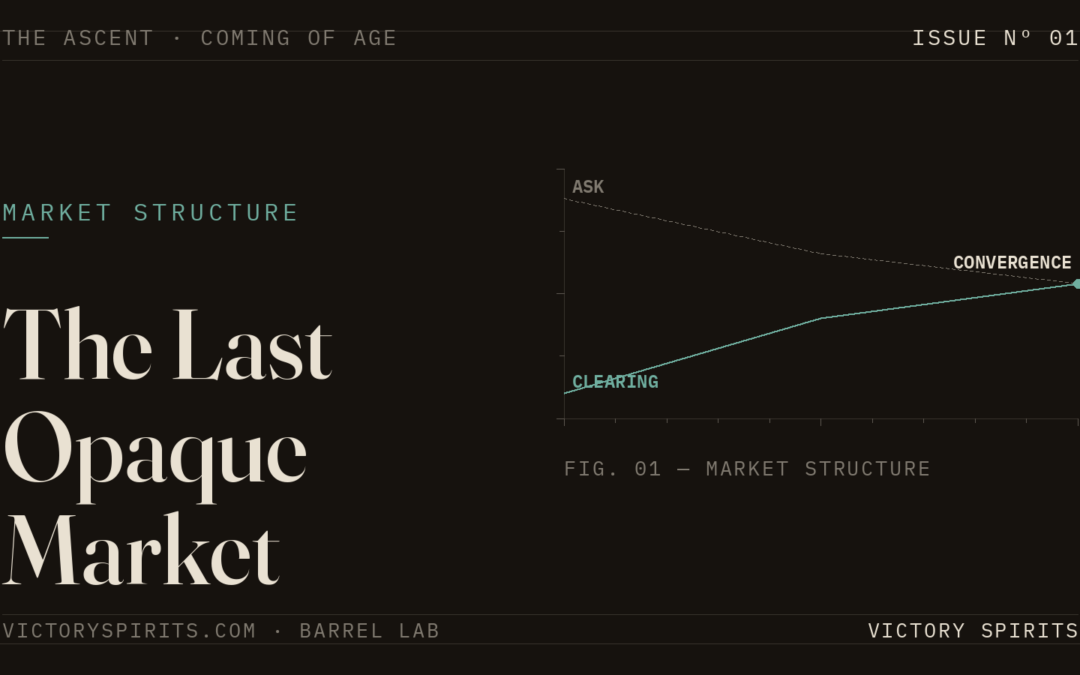

MARKET STRUCTURE · ISSUE Nº 01
The Last Opaque Market
Bulk whiskey is the final great commodity inefficiency. It is about to become someone’s opportunity.
Here is how a barrel of aging whiskey changes hands in 2026.
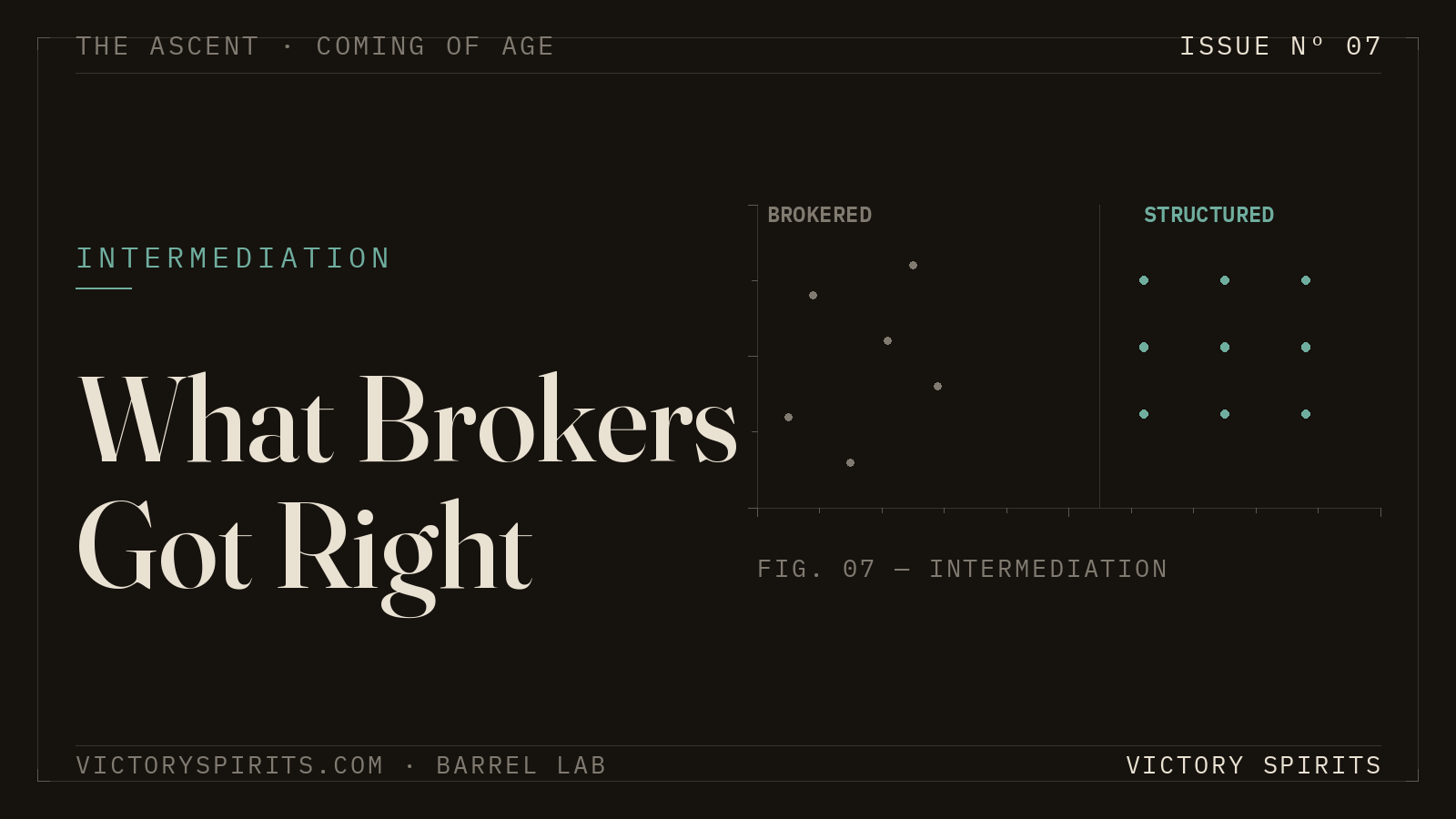
A broker hears that a distillery has surplus inventory. He calls a few buyers he trusts. Someone names a number. The number is defended by reputation, not by any published reference. There is no listing, no comparable sales history a buyer can pull up, no index against which to check whether the price is fair. The deal closes on a relationship, and the next identical barrel might trade for fifteen percent more or less depending entirely on who is on which end of the phone.

Navigating Change
Understand the evolving landscape of whiskey commerce and the forces driving its future.
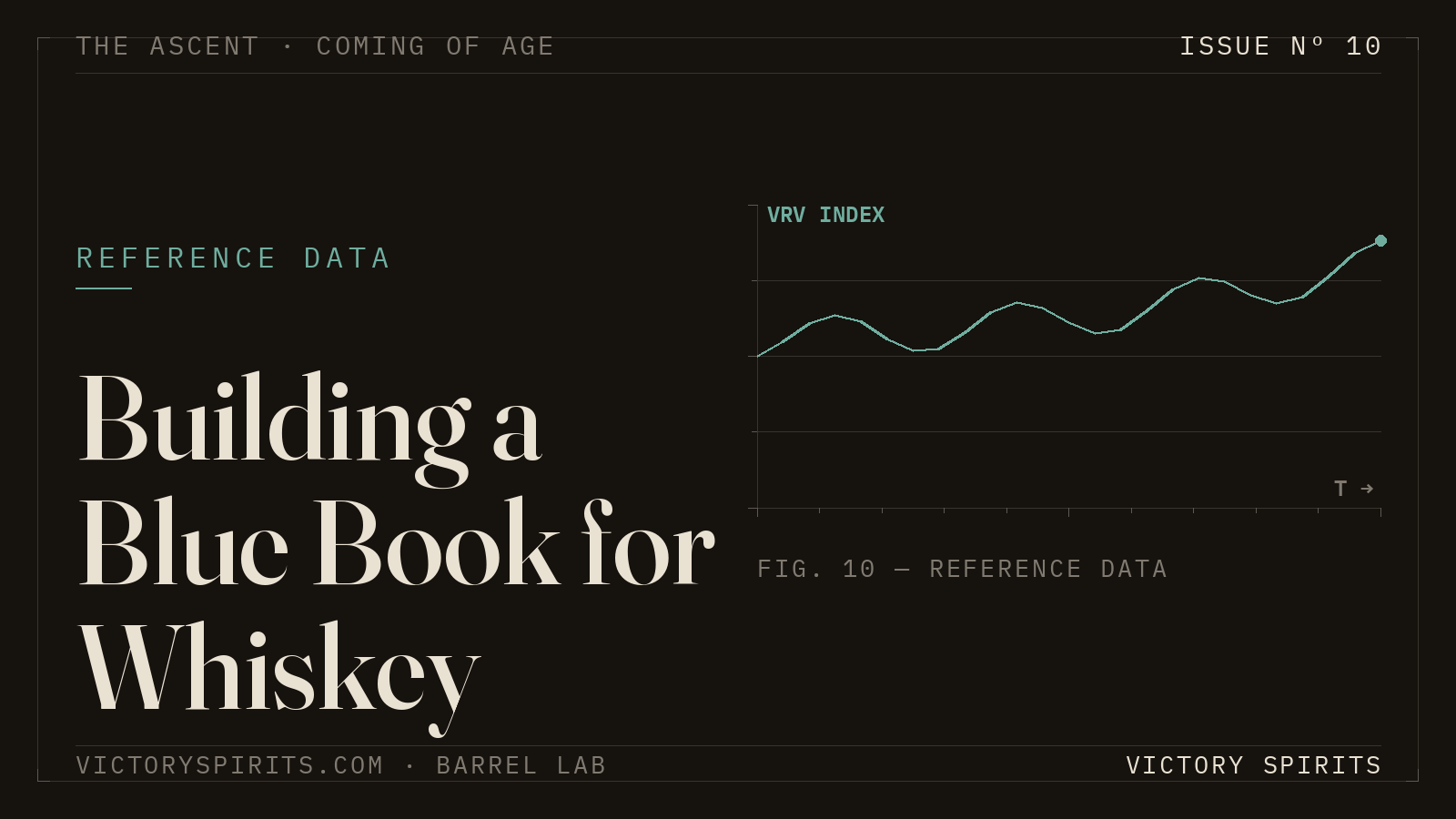
Every other commodity market of consequence solved this problem decades ago. Equities have tape. Bonds have Bloomberg. Used cars have a Blue Book. Houses have multiple listing services. Each of those markets was once exactly where bulk whiskey sits today — relationship-brokered, asymmetric, priced by whoever held more information — and each was reorganized, permanently, by the arrival of a reference layer that made value legible to both sides of a trade.
Bulk whiskey has not had that moment yet. It is the last major commodity still running on the phone-call model. And three forces are converging to end it.
The surplus changed the math
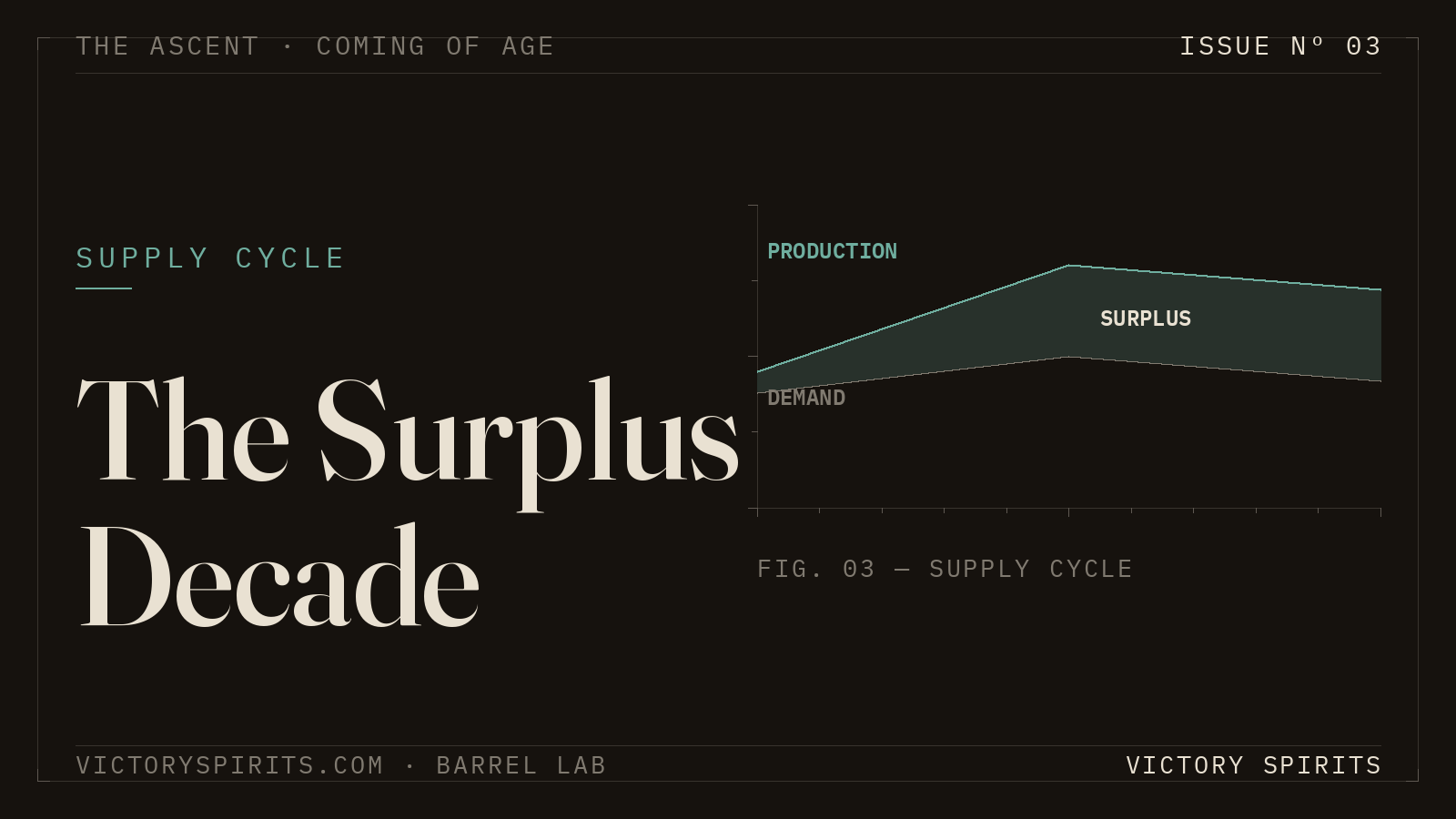
The bourbon boom did what booms do: it pulled production forward. Distilleries laid down barrels against demand curves that assumed the line only went up. The line did not only go up. The result is a market now carrying real surplus — aging inventory that has to find a home, held by producers who would rather move it than warehouse it indefinitely.
A glut is not a crisis for buyers. It is the best sourcing environment in a generation. But it is a discovery problem. When inventory was scarce, relationships were enough — you only needed to know the few people who had what you wanted. When inventory is abundant and scattered across hundreds of distilled spirits plants, the binding constraint is no longer access. It is matching. Who has the eight-year MGP high-rye? At what proof? At what price relative to everything comparable that moved last quarter? The phone-call model cannot answer that at scale, and the scale just arrived.
The economics reward the informed and punish everyone else
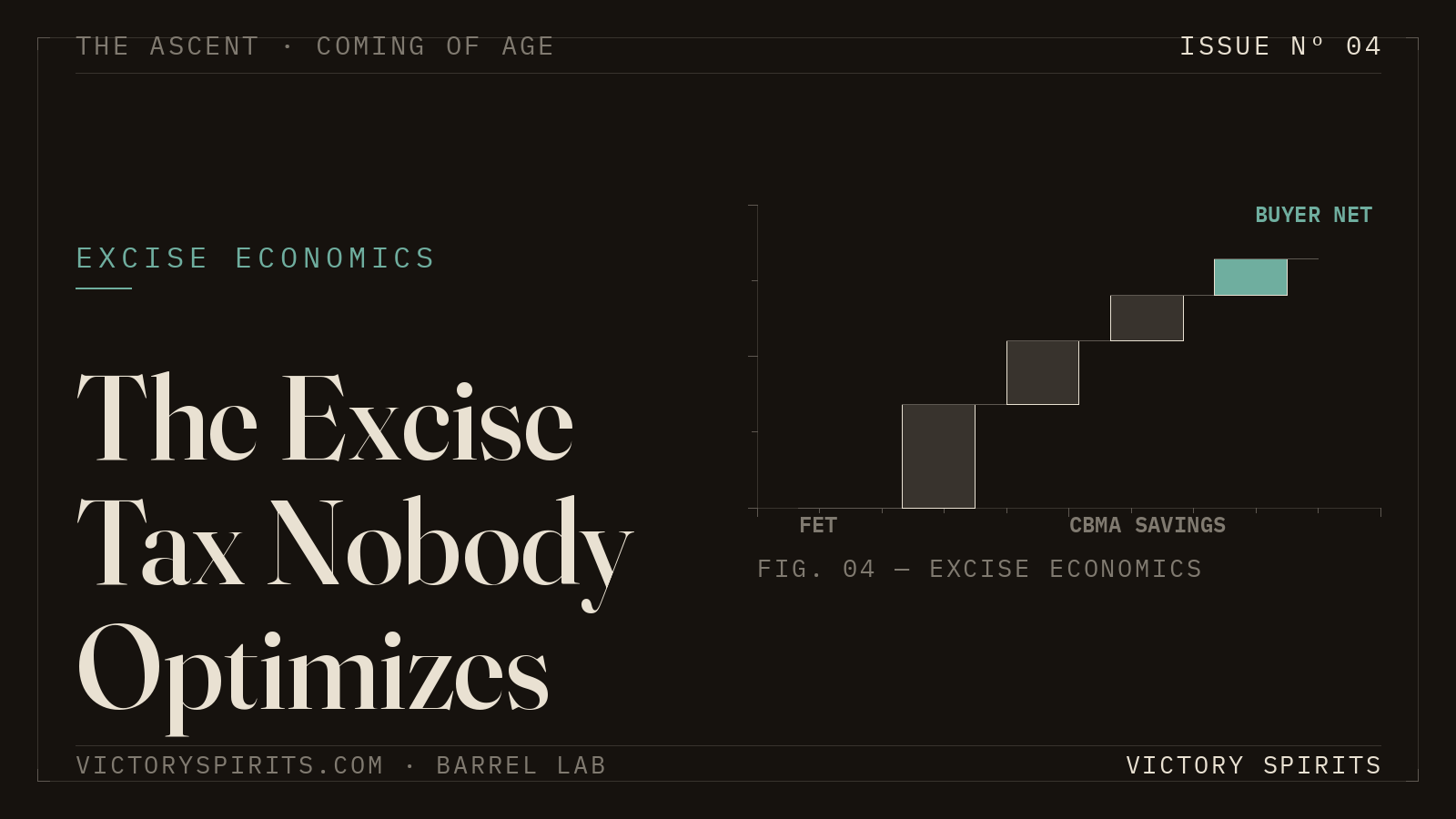
The Craft Beverage Modernization Act reduced federal excise rates for qualifying producers. The savings are real and they are significant. They are also, in practice, captured disproportionately by the players sophisticated enough to structure around them. A buyer who does not understand the tier mechanics, the transfer-in-bond rules, and how the federal excise tax actually attaches to a transaction leaves money on the table — money that exists in the structure of the deal and goes uncollected simply because it was never made visible.
This is what opacity costs. It is not only that buyers overpay for barrels. It is that the entire economic surface of a transaction — the tax position, the proof gallons, the maturity curve, the provenance — stays hidden from the party least equipped to see it. Asymmetry is not a side effect of this market. It is the product the market has been selling.
Compliance has been a moat. It should be infrastructure.
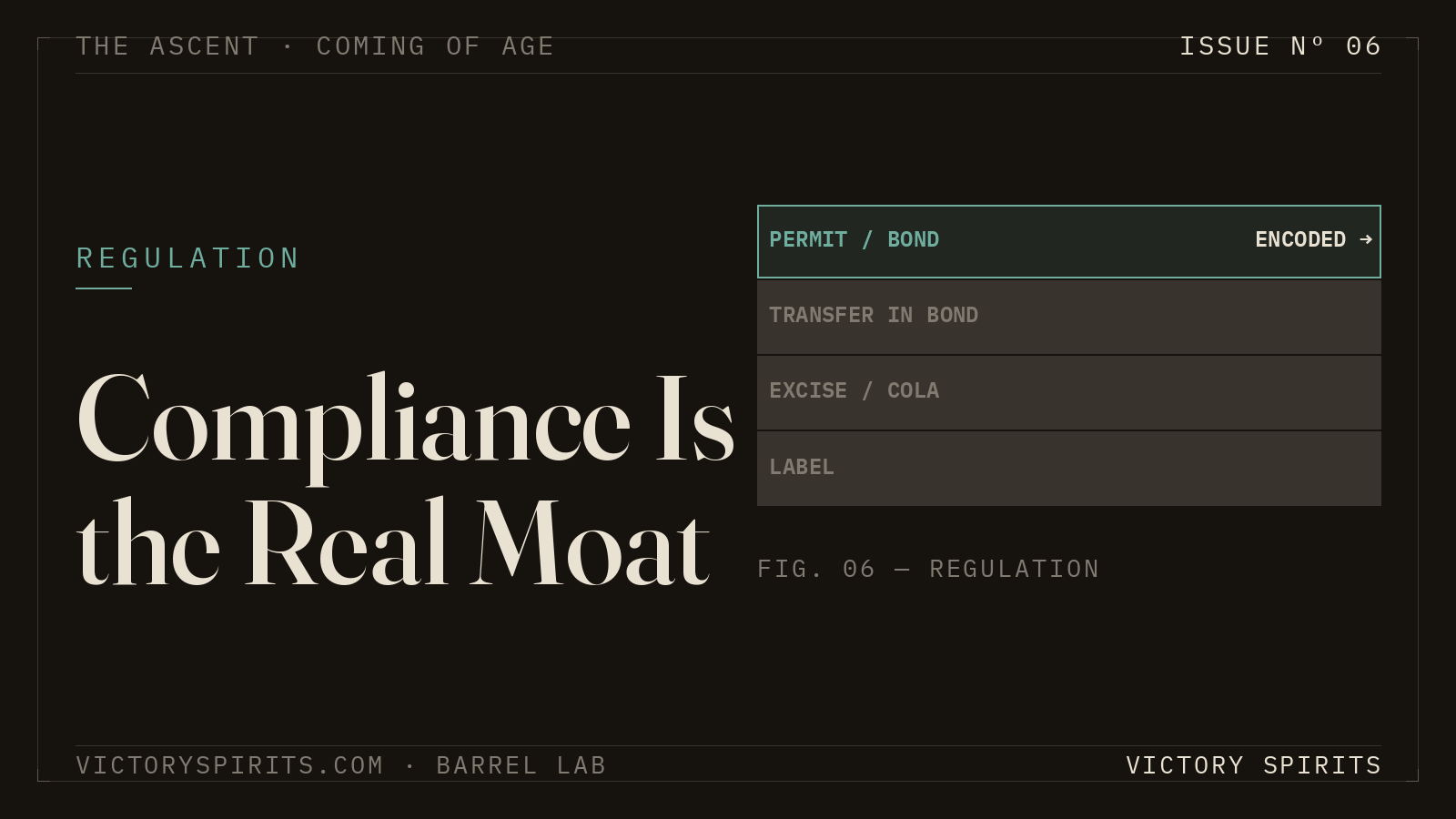
Ask why this inefficiency has survived when every adjacent market closed theirs, and the honest answer is regulation. The federal framework around distilled spirits — permitting, bonding, in-bond transfers, label approval, the excise machinery — is genuinely hard. That difficulty has functioned as a moat. The handful of operators who mastered it could intermediate everyone who had not, and they had every incentive to keep the complexity opaque, because the complexity was the business.
But a moat that exists only because the water is muddy is not a durable moat. The regulatory layer is knowable. It can be encoded, made navigable, turned from a barrier that protects incumbents into infrastructure that admits newcomers. The first platform to treat compliance as a feature rather than a gate does not just lower a cost. It changes who is allowed to participate.
What legibility actually looks like
A legible barrel market is not a mystery. It looks like the markets that already made the transition.
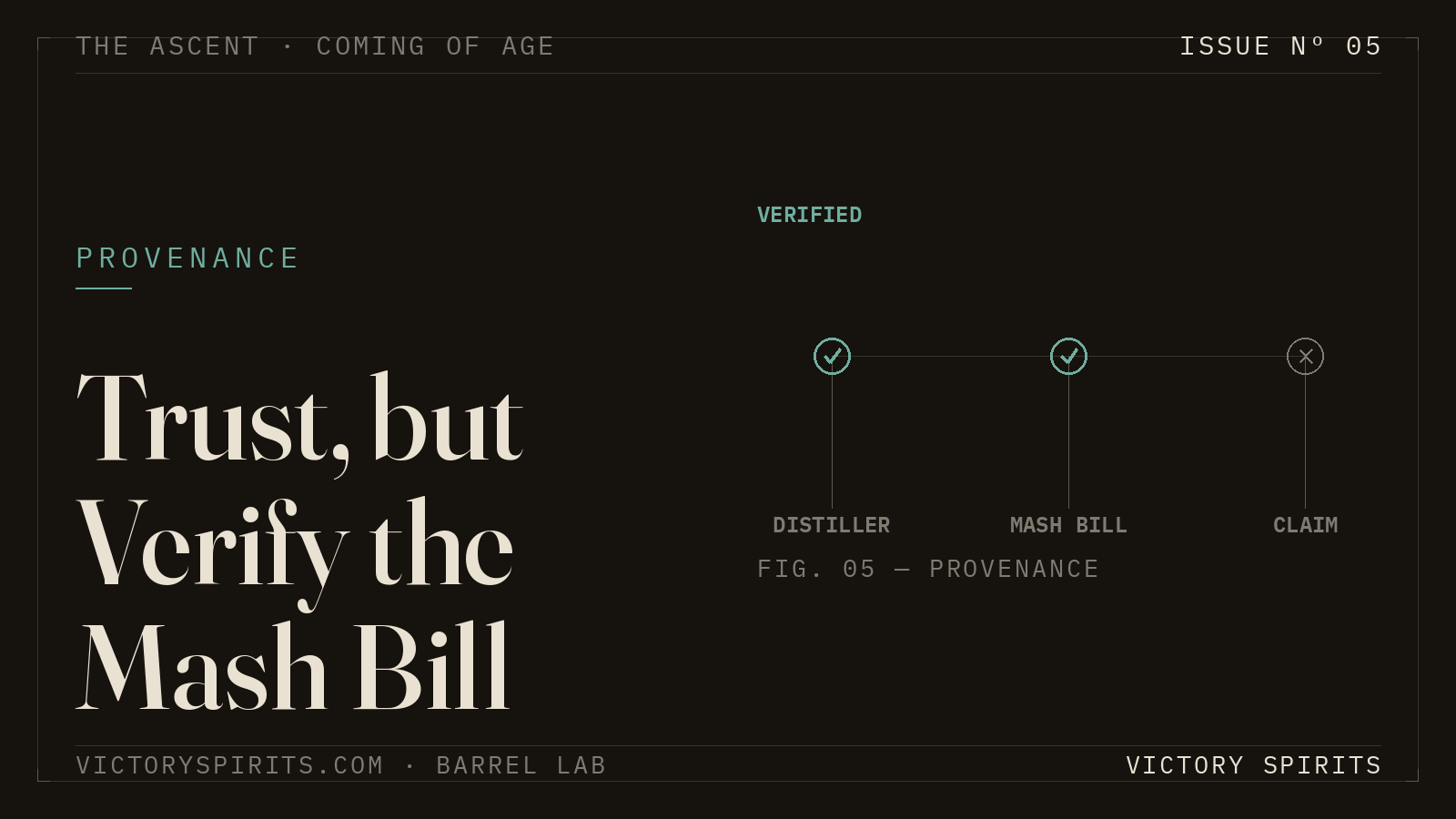
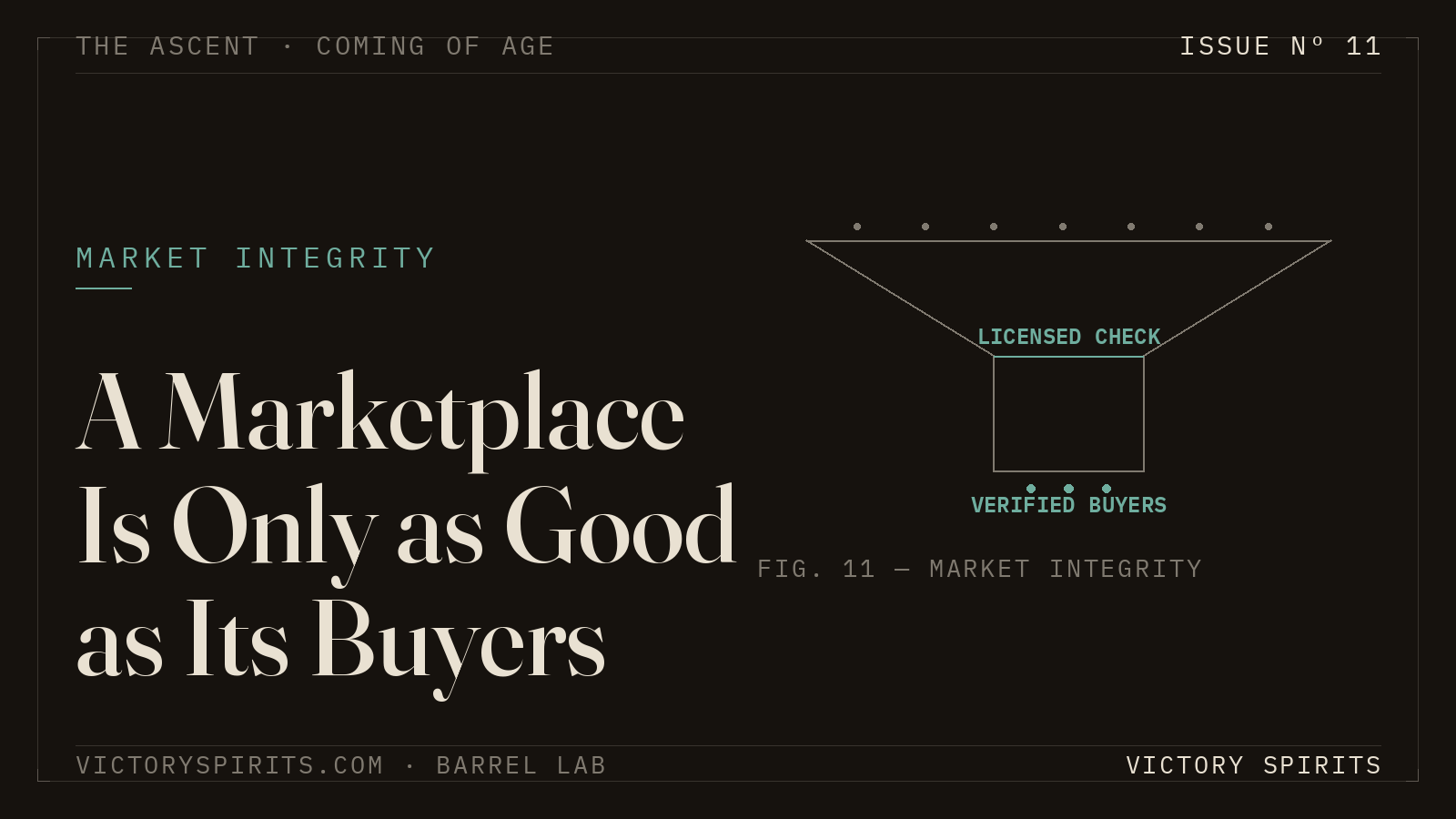
It has verified participants — buyers confirmed as licensed before they can transact, because a marketplace is only as trustworthy as the people inside it. It has structured listings instead of whispered availability. It has a defensible reference value — a methodology that prices a barrel against the weight of comparable trades and market signals, so that “what is this worth” has an answer that does not depend on who is asking. It has provenance you can check, so the mash bill is a verifiable fact rather than a seller’s claim. And it shares the economic surface — the excise position, the maturity, the proof — with the buyer instead of hoarding it.
None of this replaces relationships. The best brokers in this business are extraordinary, and the human judgment they bring will matter for as long as whiskey is made. What changes is the floor. Below the level where judgment adds value, the market gets a shared set of facts. Price discovery stops being a privilege and becomes infrastructure.
The inefficiency closes either way
Markets do not stay opaque forever once the conditions for transparency arrive, and the conditions have arrived: more inventory than the old model can match, more economic value hidden than informed buyers will tolerate, and a regulatory layer that is finally being encoded rather than guarded.
The only open question is who builds the reference layer — and whether they build it to extract from the asymmetry or to close it.
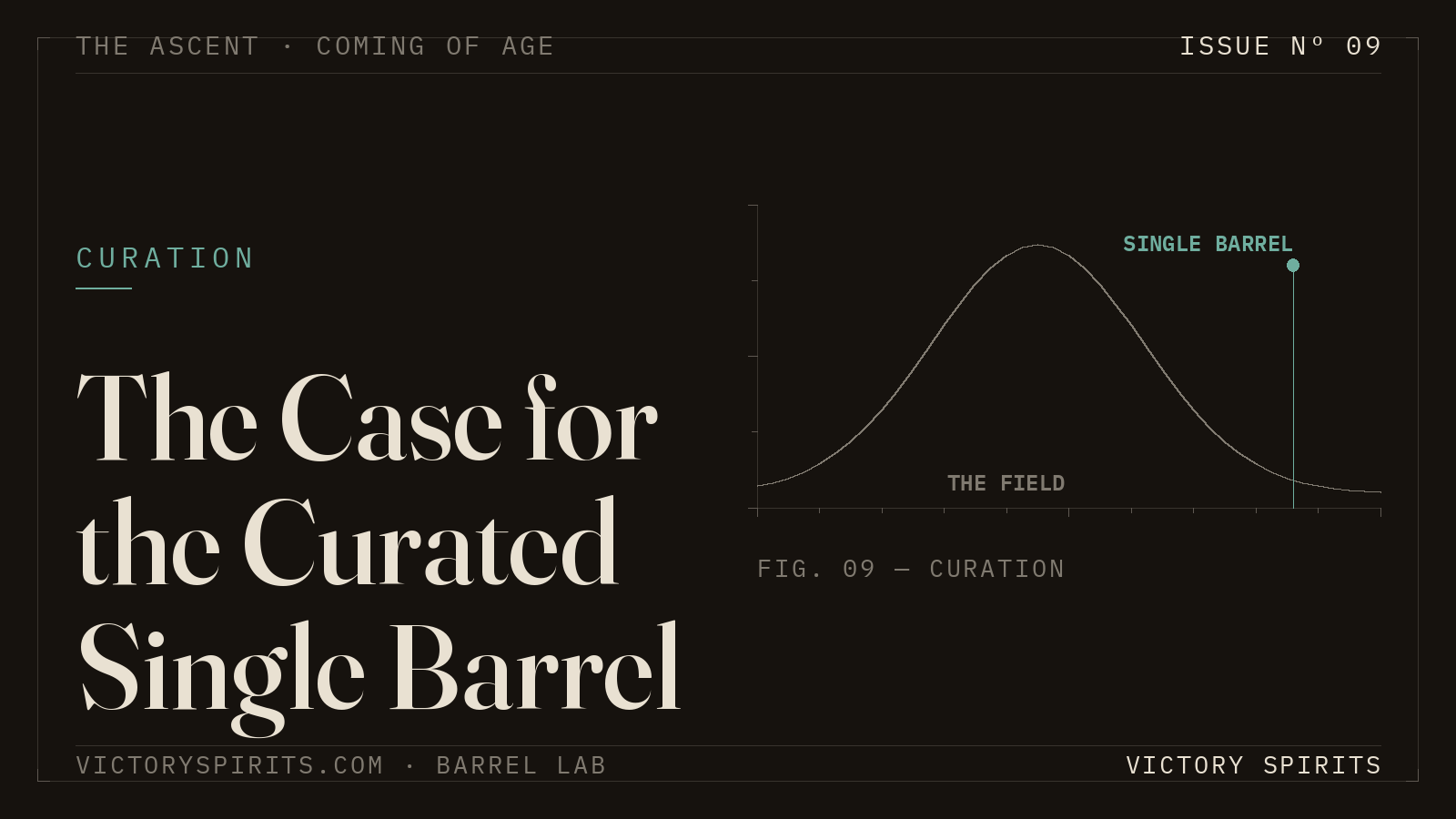
We are building Barrel Lab to close it. That is the path forward, and over the coming issues we are going to argue for it in detail: how a barrel should actually be valued, why the surplus is an opportunity and not a threat, what the excise math really looks like, and how a brand with no still of its own gets from a barrel to a bar.
The phone-call market had a good run. The legible one will have a better one.
The Ascent: All Issues
First Season Topics

Proof & Provenance
Launching Soon the Podcast
Join us for ‘Proof & Provenance,’ a podcast that delves into the intricate world of the whiskey market. Through candid conversations with industry insiders, we explore the nuances of pricing, provenance, and the regulatory landscape. This series offers listeners a unique perspective from those who shape the market, providing insights into the evolving dynamics of this age-old trade.
Explore the critical questions shaping the whiskey market, as we delve into the complexities of this unique industry.